Star Tortoise Care
Star care in a nutshell
This page is only a brief and basic caresheet for star tortoises. Follow the provided links to my other pages for more in-depth info on each topic.
Feeding
1.) Foodstuff
- Ideally, feed high fiber foods like weeds, grasses, leaves, flowers, cactus pads, dried salad hay, etc.
- Grocery store greens only as a secondary choice; e.g. chicory, endive, escarole, radicchio, romaine; organic is best
- Provide high fiber, low protein, and low fat meals
- Feed very little fruit, if any
- Do not feed animal protein like dog or cat food
- Feed as large VARIETY of plants as possible
- For diet details, read the diet and prepared foods pages
2.) Supplements
- ALWAYS keep a cuttlefish bone or calcium carbonate powder in the enclosure for calcium self regulation, regardless of the feeding regime
- Use of plain calcium powder (with no vitamin D3) varies among keepers from daily to 1-2x a week, or less
- Multivitamin use varies among keepers from daily to 1-2x a month, or less
- Little or no vitamin supplementation needed if fortified tortoise foods, like Mazuri or Zoo Med, are fed weekly or so (except a self-help calcium source like cuttlebones)
- Growing babies and egg laying females need more frequent supplementation
- Be CAREFUL with vitamin D3, overdose is toxic; no vitamin D3 supplementation necessary if kept outdoors with free access to the sun much of the time
- For more info, read the supplements page
3.) Water
- Keep a flat drinking water bowl in the enclosure, ideally big enough for the tortoise to self soak
- For babies, the water dish should be nonslippery and very shallow so that they can climb in and out of it easily
- Give frequent baths (soaks) to encourage drinking and help with hydration, unless your tortoise soaks himself
- Bath babies daily and adults 1-2x a week, or less
- For more details, read the feeding dishes page
Indoor housing
1.) Enclosures
- LARGE, open top reptile tubs and wooden tortoise tables are popular for adults
- Minimum size for a SHORT TERM (nights, bad weather) enclosure about 5x2 ft or 6x3 ft (e.g. Waterland tubs) for one small adult tortoise
- Young Star tortoises do well when raised with higher ambient humidity, for example, in a half or fully closed vivarium
- Weather permitting, babies can be brought outdoors for supervised visits, but ensure adequate shade areas and cool water dishes
- Stars are tropical tortoises and do not hibernate, keep them warm year round
- Avoid cold & damp conditions, but warm & humid is ok
- For more details, read the indoor housing page
2.) Lighting
- If your tortoise has limited access to an outdoor enclosure, use good quality reptile UVB lights when indoors; LONG fluorescent UVB tubes are preferred
- For more details, read the lighting page
3.) Heating
- Provide daytime basking areas with flood heat bulbs, no spot bulbs
- Provide additional heat at night if the room is cold; use reptile radiant heat panels, room heaters etc.
- Keep the enclosure totally dark at night
- For more details, read the heating page
4.) Substrates
- Popular indoor enclosure substrates include fir bark aka orchid bark, plain soil with no additives, coconut coir, soil & coco coir mix, coco coir & coco chip mix, and cypress mulch
- Popular substrates for humid hides include sphagnum moss and coconut coir
- With all loose substrates, place food on shallow trays or large tiles to avoid accidental ingestion of substrate with food; swallowing large amounts of any substrate can cause serious intestinal blockages
- For more suggestions, read the substrates page
5.) Temperature
- Daytime ambient temp 80-80+ °F
- 90-100+ °F directly under the basking bulb, adults can tolerate higher basking temps than babies
- About 75-80 °F in the coolest corner of the enclosure
- Night temp down to +-70 °F ok in dry conditions, but 75-80+ °F with higher ambient humidity or damp substrate
- Note: These temperature numbers are just basic starting guidelines, not exact requirements. It all depends on your specific setup and circumstances. If in doubt, it's better to keep star tortoises a bit warmer than cooler. If kept too cold, they can develop runny noses and other respiratory problems.
6.) Humidity
- Caution! If star tortoises are kept too dry and hot, they are prone to dehydration, especially babies. This can lead to kidney problems and urinary stone formation. Both can be fatal.
- Moderate humidity 40-75+ % is ok for adults
- Babies benefit from a higher ambient humidity, 70-80+ %
- The higher the humidity, the higher the temperature should be; popular rules of thumb are 80/80 (min 80 °F with ~ 80% humidity) and 85/85 (min 85 °F with ~ 85% humidity)
7.) Microclimates
- Provide a temperature range of 70/75-95+ °F in the enclosure, it allows the tortoise to warm up or cool down as needed
- Provide cooler dry areas and warm high humidity areas
- Babies especially benefit from humid hide boxes or warm, damp substrate areas; babies can also be raised in well controlled vivariums
- Another choice is to use a warm, humid vivarium with a door to a open table that provides a drier and cooler area
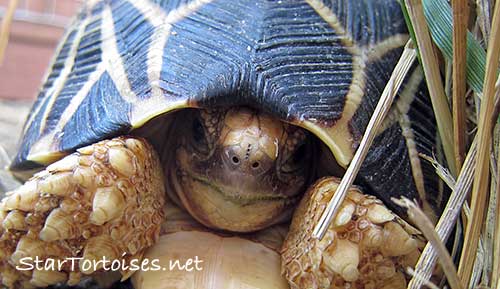
This cute, but shy, Burmese star tortoise girl is hiding inside her shell. Just having a cautious little peak.
Outdoor housing
1.) General
- Natural sunlight is the best UVB source, and it's free :O)
- Keep adults outdoors as much as possible for UVB exposure and opportunity to exercise
- Adults can live outside 24/7 in warmer climates if heated houses are provided for cooler nights
- Babies can go outdoors for supervised visits on warm and sunny days, min 70-75 °F; always ensure adequate shade and cool drinking water
- For details, read the outdoor housing page
2.) Enclosures
- ALWAYS provide a water dish; in hot weather, put it in a shady area to keep the water cooler and refill as needed
- Provide several shady areas, bushes and hides
- For adults, make the enclosure as large as possible
- For babies, cover the top with hardware cloth or wire netting to protect from predators
- Stars are not the best climbers and they are not big diggers, so they won't climb over the walls (if adequately high) of the enclosure or dig under them to escape
- Provide sunny slopes or raised laying beds for adult egg laying females
- Plant the enclosure with edible greenery, check lists of toxic plants to avoid